In 2025, the average consumer spent more than six hours per day (closer to seven, to be precise) browsing the internet. What’s interesting is that a significant portion of those hours is regularly spent on brand interactions (or consuming branded content), with data suggesting that 48% of social media users spend more time interacting with brands than previously.
However, while this data may suggest that capturing new leads and nurturing them into customers is easier due to these consumer behaviors, practical experience shows just the opposite is happening.
The average conversion rate (across all industries) is a mere 2.9%. Research also suggests that form conversion rates were quite low, averaging at 1.7% due to the fact that most consumers prefer self-service and the ability to independently resolve their pain points. Add to this the fact that the cost of generating new leads (from paid ads) grew over 5% over the past year, and it’s evident that the future of lead generation necessitates a more contemporary approach.
But what are the best tactics for capturing new prospects in the coming period? This guide will cover the top lead-generation strategies every business should use in 2026, along with some inspiring examples of how real-life brands employ them to reach their goals.
Minimize Conversion Obstacles with Low-Risk Lead-Generation Forms
One of the best hacks to improve lead-generation across different channels is to minimize the risk your target audience associates with completing one of your sign-up forms.
Here’s why. Most people (71% of consumers, to be precise) are frustrated by irrelevant branded messaging. And many will choose to ignore branded content (or interactions) to avoid this negative feeling. But even though they may not want to be targeted by ads or sales-oriented content, the simple truth is that most people still wish to resolve their pain points. They just want to do so in a way that doesn’t compromise their privacy or test their patience.
With this in mind, one of the best lead-generation strategies you can use in 2026 is to minimize your ideal customers’ specific conversion obstacles through low-risk forms.
Essentially, you need to identify your target audience’s pain points and desired outcomes. Then, present your lead-capture forms as a low-risk first step toward resolving those pain points and reaching those desired goals.
For a more traditional solution, consider shortening your forms. After all, you don’t need to know everything about potential customers to successfully lead them toward a purchase. Basic info (such as their name and email) is more than enough.
Alternatively, you could experiment with more advanced tactics, like the one below.
For instance, Kérastase markets its lead generation form as a Hair Quiz — a digital diagnostic tool to help prospects discover their ideal haircare routines. What’s unique about it is that it doesn’t require web visitors to enter their personal data (name or email address) to receive product recommendations. However, a pop-up at the end of the quiz gives leads the chance to receive 20% off their newly discovered routine — in exchange for signing up for the Kérastase newsletter. In other words, the risk of conversion is minimal, but the gains are pretty significant, especially for consumers in the lower stages of the sales funnel who have a high purchase intent.

Source: kerastase-usa.com
Highlight Relevant Product Benefits and Features Near CTA Buttons
In some cases, your biggest lead-generation obstacle won’t be your target audience’s (insufficient) willingness to enter your sales funnel. It will simply be your web visitors’ lack of product understanding.
At the end of the day, for consumers to be willing to convert into a brand’s customers, they need to have a crystal clear vision of what they will receive.
According to consumer behavior research, only 6-11% of shoppers spend under 10 minutes doing pre-purchase product research. The majority of consumers spend between 10 and 60 minutes collecting product info. And some people even dedicate hours or days to pre-purchase analysis — a tendency that is particularly common for big-ticket items and in the B2B sales cycle.
Now, obviously, the best strategy for ensuring a larger portion of your target audience wants to convert into customers is to be committed to creating highly attractive, customer-centric value propositions.
However, you can also boost your lead-generation efforts by simply highlighting relevant product benefits and features near your main CTA buttons, as this will effectively convince a significant portion of shoppers to convert into leads.
Custom Sock Lab, for instance, does this by emphasizing that customers can pair the brand’s primary product (the custom-made socks) with personalized packaging, gourmet snacks, or greeting cards. The approach effectively demonstrates that the brand’s solution isn’t just one part of a present but a truly complete option for a unique gift — regardless of the occasion it’s gifted on.
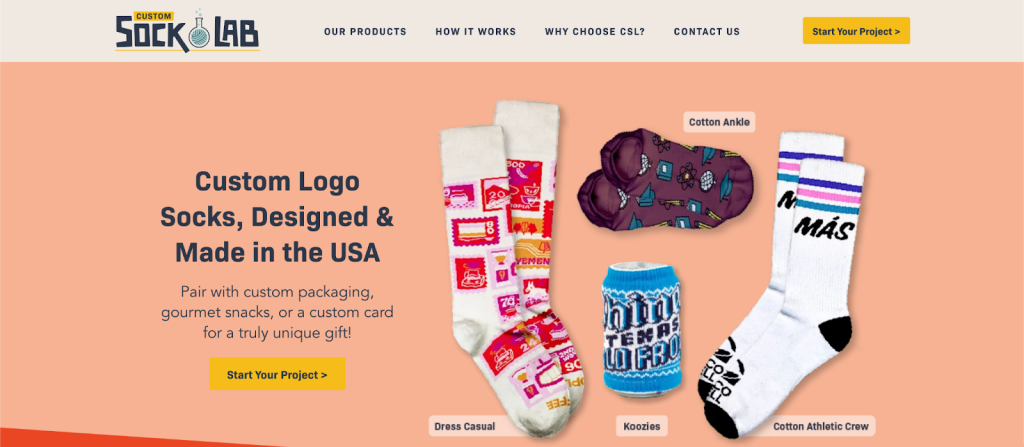
Source: customsocklab.com
Offer Attractive and Valuable Conversion Incentives
One of the primary reasons your lead generation efforts may not be delivering results is that your target audience simply doesn’t recognize the value of entering your brand’s sales funnel.
Ultimately, if you want to generate more leads that you can then nurture into customers, you’ll need to know what consumers seek from brands in the first place.
According to research from Edelman, the top three purchase factors for B2C buyers are product quality, value for money, and brand trust. As for B2B shoppers, their primary concern is ROI (and getting it as soon as possible).
So, if you want to convince more of your potential customers to enter your sales funnel and begin their journey toward a conversion, present them with attractive and valuable incentives that will inspire them to begin a customer journey with your brand.
One of the most effective ways of doing this is to combine your lead-generation and content marketing efforts into a single mechanism.
By producing and publishing high-quality, thought-leadership content, you’ll effectively attract ideal customers to your brand. Then, by putting that content behind a sign-up form, you’ll inspire high-value prospects to convert into leads (and unlock the ability to nurture them into customers).
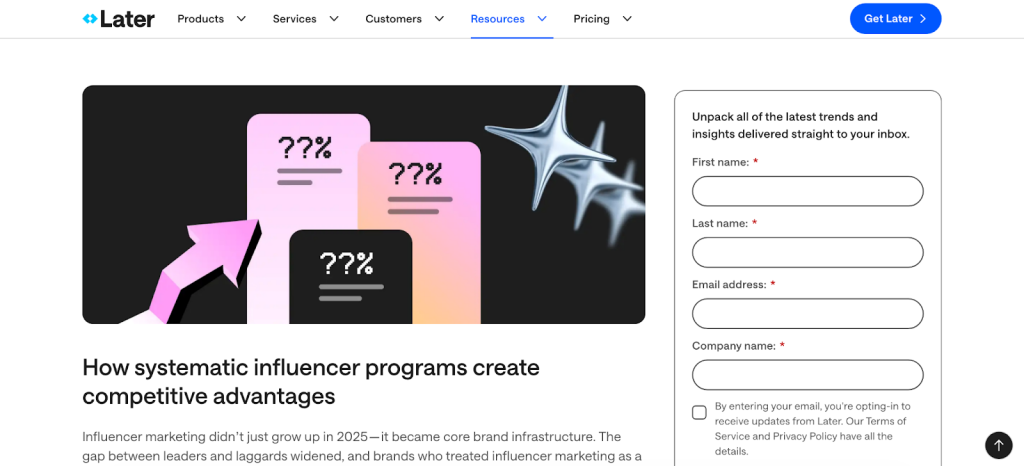
For example, Later’s State of Influencer Marketing report is an excellent example of a lead-generation resource that trades value for email sign-ups. And, seeing as it targets a very specific audience segment and promises original value, it’s the ideal content format for attracting and converting qualified leads.
Source: later.com
If your primary target audience consists of end consumers, you can still use similar tactics. You’ll likely have to adjust the type of value you offer to better align with the B2C buyer’s journey, whether that includes creating entertaining, educational, or even sales-oriented incentives (such as the first-purchase discount mentioned in one of the earlier examples).
Turn Chat Into a Lead-Generation Mechanism
In some cases, the best opportunity to generate new leads is to focus your attention on web visitors whose purchase intent (or at least engagement rate) is already high.
At the end of the day, getting someone to convert can be extremely difficult if they’re still unsure whether the value your brand offers is even the right choice for their needs.
However, if you direct your attention toward converting qualified leads (who are ready to buy one of your products or at least enter your marketing funnel), you’re going to have much higher success rates and waste a considerably smaller portion of your lead-generation budget and resources.
One of the easiest methods to accomplish this is to use your site’s chatbot or live chat feature to capture new prospects.
Ultimately, asking web visitors for their name and email address before they can submit a question isn’t too big of an ask — especially if the result of such an interaction is them receiving personalized help.
However, the most impressive benefit of this approach to capturing new leads is that it provides the opportunity to follow up with potential customers at a later time. It effectively elevates their brand perception, builds customer-brand relationships, and creates a preference for buying from your business.
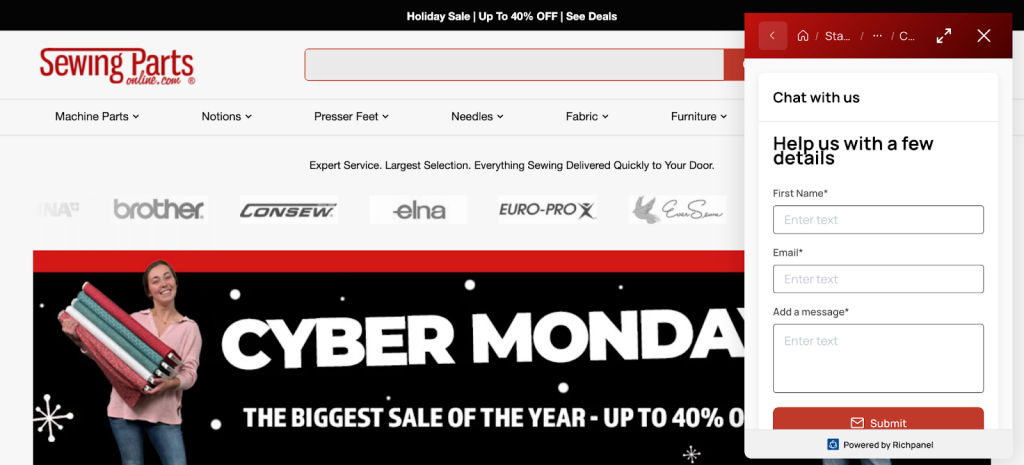
For instance, Sewing Parts Online implements this tactic on its website. And the most impressive thing about the strategy isn’t that it drives conversions. Instead, it’s that simply capturing an interested customer’s name and email allows the brand’s sales and support teams to answer their questions and resolve any issues, regardless of whether the inquiry arrives during office hours or at a time of day when live support isn’t available. That is an invaluable building block of a positive customer experience and one of the strongest motivators for consumers to choose a particular brand once they’re ready to convert.
Source: sewingpartsonline.com
Don’t Ignore Existing Leads Who Are Stuck in the Early-to-Mid Stages of the Buyer’s Journey
Finally, as you explore strategies that will help you upgrade your lead-generating efforts in 2026, it’s crucial that you don’t only think about capturing new leads.
Just think about it. If average conversion rates range from 2% to 5%, that signifies a lead drop-off rate of 95% to 98%. Unfortunately, that’s just how conversions work — it’s practically impossible to turn all leads into customers.
But what if you can recover (at least some of) the people who entered your sales funnel?
Focusing on re-engagement, particularly in the early-to-mid stages of the buyer’s journey, can be an exceptionally valuable opportunity for boosting your conversion rates.
For instance, personalized drip email campaigns delivered to your prospects’ inboxes can be a solid way to remind them about the value you offer (and potentially nudging them toward re-entering and moving through the funnel).
Alternatively, you might opt to go with a more value-based approach, such as sending out exclusive offers, invitations to offline or online events, or even just offering to chat with your audience about the possibility of helping them resolve their pain points.
Final Thoughts
Despite the growing challenges of differentiating your brand online and convincing potential customers to choose your solution instead of an alternative option, effective lead-generation is possible in 2026 and beyond. The only key to success is understanding your target audience’s wants, needs, and preferences and aligning your approach with their behavior.
The tactics outlined in this guide are quite versatile and easy to adapt. So don’t hesitate to give them a try.Of course, if you want exceptional results, you will have to adjust them to fit your brand’s unique needs. Nevertheless, you can rest assured that the ROI will be worth it — especially if your business has to deal with a lengthy sales cycle or a highly specific customer journey.