The Hidden Cost of Timesheet Inefficiencies in B2B Services
In many B2B service environments, time is literally money. Billable hours are the lifeblood of firms ranging from consulting to legal and IT services. However, a troubling phenomenon persists: a significant portion of recorded billable hours never make it onto client invoices. This disconnect translates into lost revenue and diminished profitability, often caused by issues such as timesheet edits, restrictive access rights, and technological gaps between tools. Addressing these inefficiencies is critical for businesses striving to optimize cash flow and maintain competitive pricing.
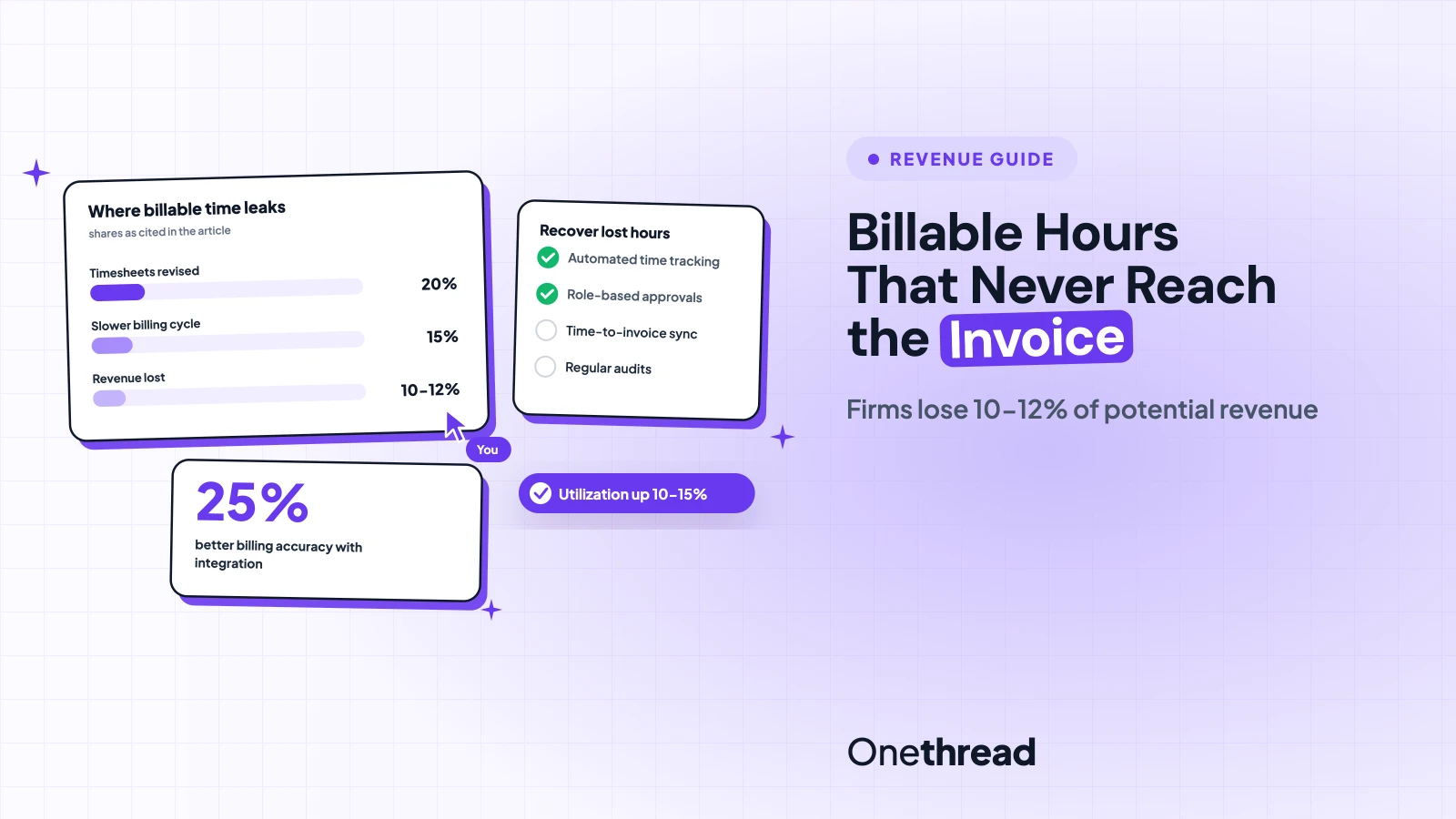
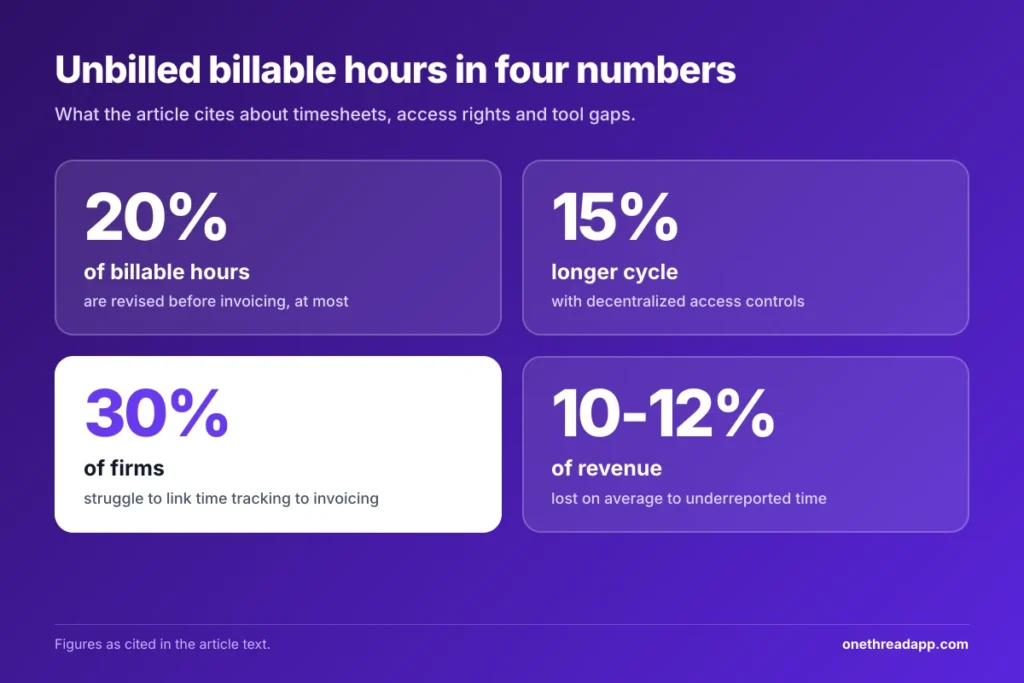
A key contributor to this problem is the manual editing of timesheets. While edits might be necessary to correct errors or reflect client agreements, they can also serve as a source of billable time leakage. Studies have shown that up to 20% of recorded billable hours undergo revisions before invoicing, with a portion of these edits resulting in reductions or deletions of time entries altogether. Each unbilled hour represents a direct hit to a company’s bottom line.
One notable solution to streamline timesheet accuracy and reduce editing complexities is APC Integrated’s implementation. This implementation enhances visibility into recorded hours and ensures compliance with billing policies, reducing the need for extensive manual intervention. By integrating seamlessly with existing workflows, firms can achieve more precise time tracking, leading to fewer discrepancies between recorded and billed hours.
The Impact of Access Rights on Time Reporting and Billing
Access rights and permissions within timekeeping systems play a crucial role in shaping how billable hours are recorded and managed. Overly restrictive access can lead to delays in timesheet approvals and corrections, contributing to lost billable time. Conversely, insufficient controls can expose firms to inaccuracies and potential fraud, which may also result in adjustments that reduce billable hours.
For example, in multi-department organizations, complex approval hierarchies often mean that timesheets require multiple reviews, stretching the billing cycle and increasing the chance that some billable hours will be omitted. A recent survey found that companies with decentralized access controls experienced a 15% longer cycle time from time entry to invoice compared to those with streamlined permissions.
To combat these issues, reliable access management solutions are essential. Engaging with providers offering reliable technical support from FTI Services can help organizations implement clear, role-based permissions that balance security with efficiency. This approach facilitates timely approvals and reduces the administrative burden on staff, ultimately minimizing gaps between recorded and invoiced hours.
Bridging the Gaps Between Timekeeping and Billing Tools
Another pervasive challenge lies in the technological fragmentation between time tracking, project management, and billing systems. Disconnected tools often lead to data silos and manual data transfers that introduce errors and omissions. For instance, a survey by the Professional Services Automation (PSA) industry revealed that 30% of firms struggle with integrating their time tracking software with invoicing platforms, leading to frequent discrepancies and delayed billing cycles.
These gaps mean that even accurately recorded billable hours may not flow smoothly into the billing system, causing delays or losses in invoicing. Integration failures often require manual reconciliation, which is time-consuming and prone to mistakes, further increasing the risk of billable hours falling through the cracks.
To address this, organizations are investing in unified platforms or robust middleware that synchronize data across systems in real-time. These solutions provide end-to-end visibility of time entries through to invoice generation, ensuring that every billable minute is accounted for. The adoption of such integrated systems has been linked to a 25% improvement in billing accuracy and a 20% reduction in day sales outstanding (DSO).
The Ripple Effects of Lost Billable Hours on Business Performance
The financial impact of billable hours that never reach the invoice extends beyond immediate revenue loss. When firms consistently fail to capture and bill all productive time, it can skew profitability analyses and undermine strategic decision-making. Over time, this erosion of revenue inflates operational costs relative to income, reducing margins and limiting funds available for investment in growth initiatives.
Moreover, unbilled hours distort utilization metrics, a key performance indicator in many professional services organizations. Poor visibility into true utilization can lead to inaccurate forecasting and resource allocation, creating inefficiencies that ripple throughout the business. In fact, according to a report by the Association of Professional Staffing Companies, firms lose an average of 10-12% of potential revenue due to underreported billable time.
Clients may also be affected indirectly. If billing inconsistencies emerge or invoices are delayed due to internal process gaps, client satisfaction and trust can deteriorate. Transparent, timely invoicing is crucial for maintaining strong client relationships and ensuring steady cash flow.
Best Practices to Recover Lost Billable Hours
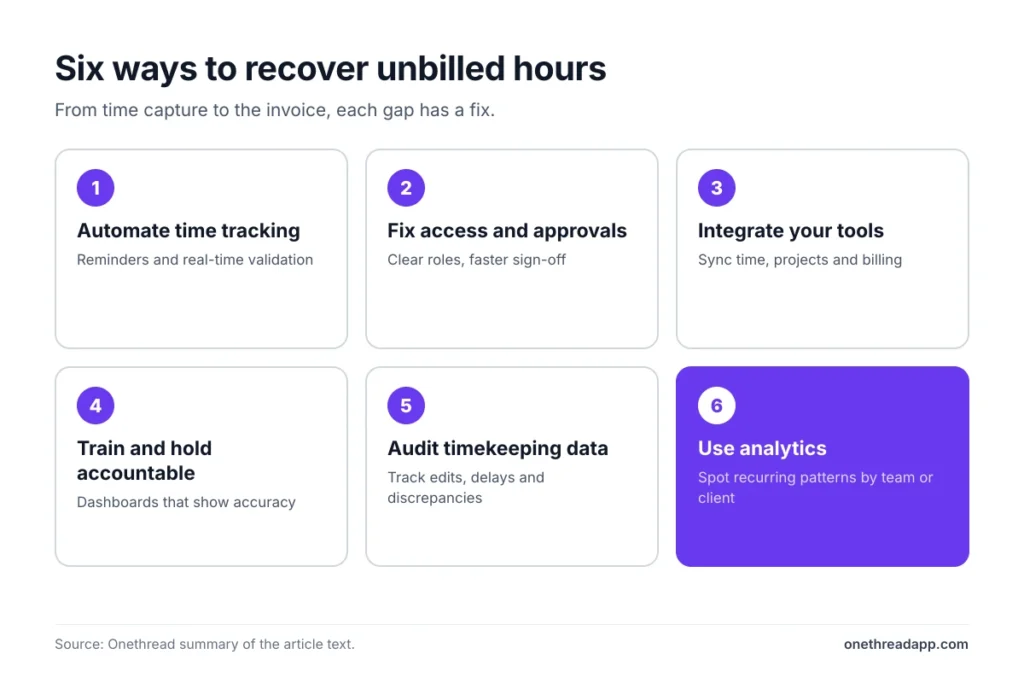
Recovering billable hours that never reach the invoice requires a multifaceted approach:
- Implement Automated Time Tracking and Validation: Utilizing automated systems reduces human error and limits the need for manual edits. Enhancements such as automatic reminders and real-time validation checks help ensure that recorded time is accurate and complete.
- Optimize Access Rights and Approval Workflows: Establishing clear, role-based permissions and streamlining approval processes minimizes delays and prevents unauthorized modifications. This balance helps maintain data integrity while accelerating billing cycles.
- Invest in Integrated Technology Ecosystems: By choosing or developing interconnected platforms, organizations can reduce data silos and manual reconciliation. This integration supports accurate and timely invoicing.
- Train Staff and Promote Accountability: Educating employees on the importance of precise time tracking and billing procedures fosters a culture of accountability. Transparent reporting dashboards can motivate teams to maintain high standards.
- Regularly Audit and Analyze Timekeeping Data: Continuous monitoring of timesheet edits, approval timelines, and billing discrepancies enables firms to identify bottlenecks and implement corrective actions proactively.
- Leverage Analytics to Identify Patterns: Advanced analytics can reveal recurring issues such as frequent edits or delays linked to specific projects, teams, or clients. Addressing these root causes can significantly reduce lost billable hours over time.
The Role of Organizational Culture and Change Management
Beyond technology and processes, organizational culture plays a pivotal role in ensuring accurate time capture and billing integrity. Firms that emphasize the importance of precise timekeeping and recognize employee efforts in meeting billing goals tend to perform better in minimizing lost hours.
Change management initiatives that engage staff early and provide clear communication about the benefits of new systems or policies help secure buy-in and reduce resistance. For instance, involving end-users in the selection and customization of time tracking tools can improve adoption rates and data quality.
Furthermore, leadership commitment to enforcing policies around timesheet accuracy and timely approvals reinforces accountability. Incentivizing teams based on utilization metrics or billing performance can also motivate adherence to best practices.
The Bottom Line: Enhancing Revenue Realization through Process and Technology
In the competitive B2B services landscape, maximizing revenue from billable hours is critical. The gap between recorded time and invoiced time often stems from a combination of manual timesheet edits, restrictive or inefficient access rights, and disconnected technologies. Addressing these factors not only recovers lost revenue but also improves operational efficiency and client trust.
Firms that embrace these solutions position themselves to overcome these challenges effectively. By deploying integrated systems with streamlined access controls and automated workflows, businesses can ensure that every minute of productive work is captured and billed accurately.
In a market where margins can be thin, and competition intense, these improvements can provide a significant advantage. According to industry research, companies that optimize their time tracking and billing processes can increase their billable utilization rates by 10-15%, translating to substantial revenue gains.
Ultimately, bridging the gaps between timesheet management, access rights, and billing tools is a strategic imperative. Organizations that act decisively will not only enhance their financial performance but also deliver greater value to their clients through transparency and efficiency.