Understanding the Risks in Modern Agency Workflows
In today’s fast-paced agency environment, collaboration tools have become indispensable. Client files, shared boards, and guest logins streamline workflows, enhance communication, and facilitate project management. However, these conveniences also introduce significant security risks. Agencies must balance operational efficiency with the imperative to safeguard sensitive client data and internal assets.
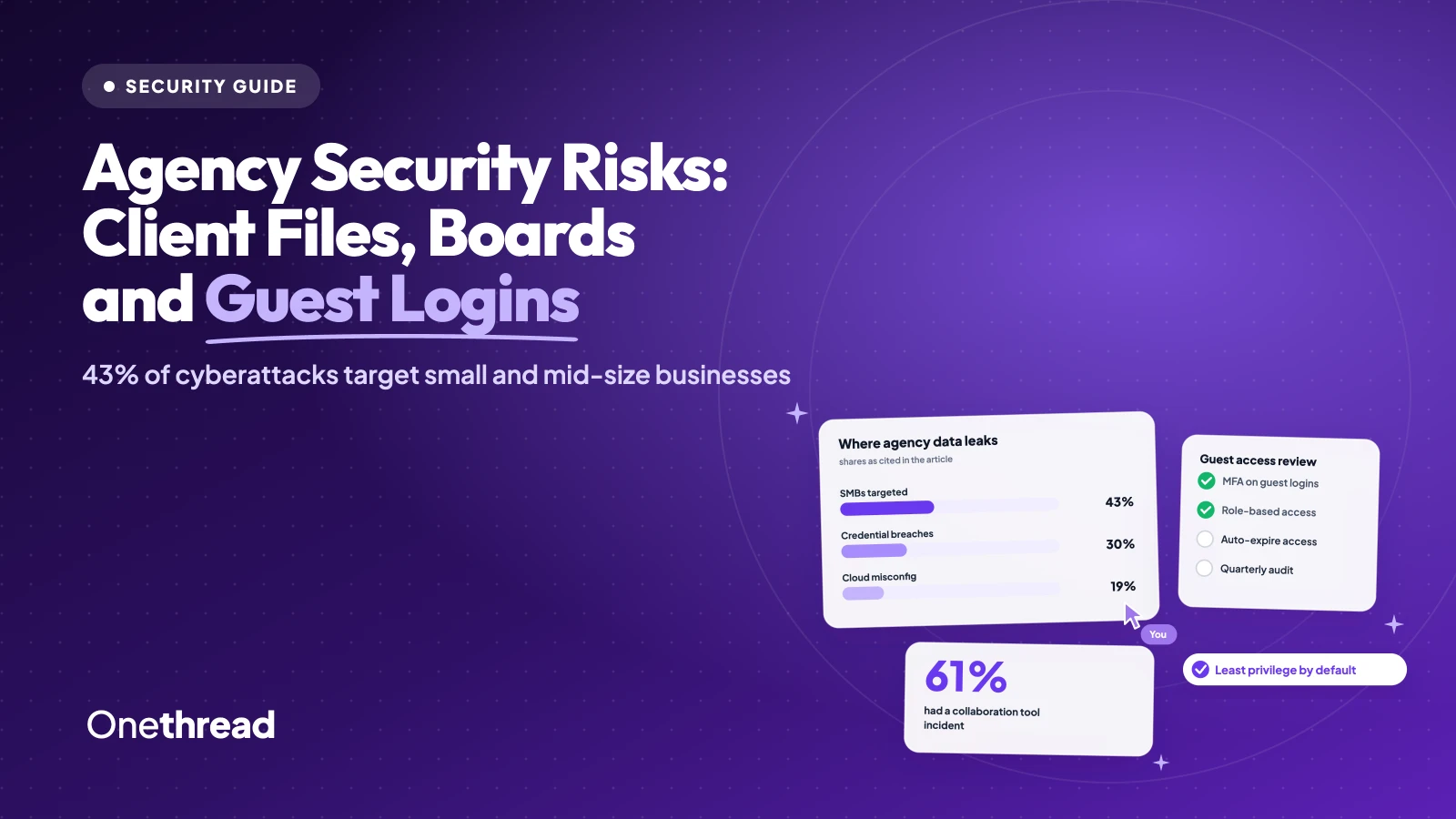
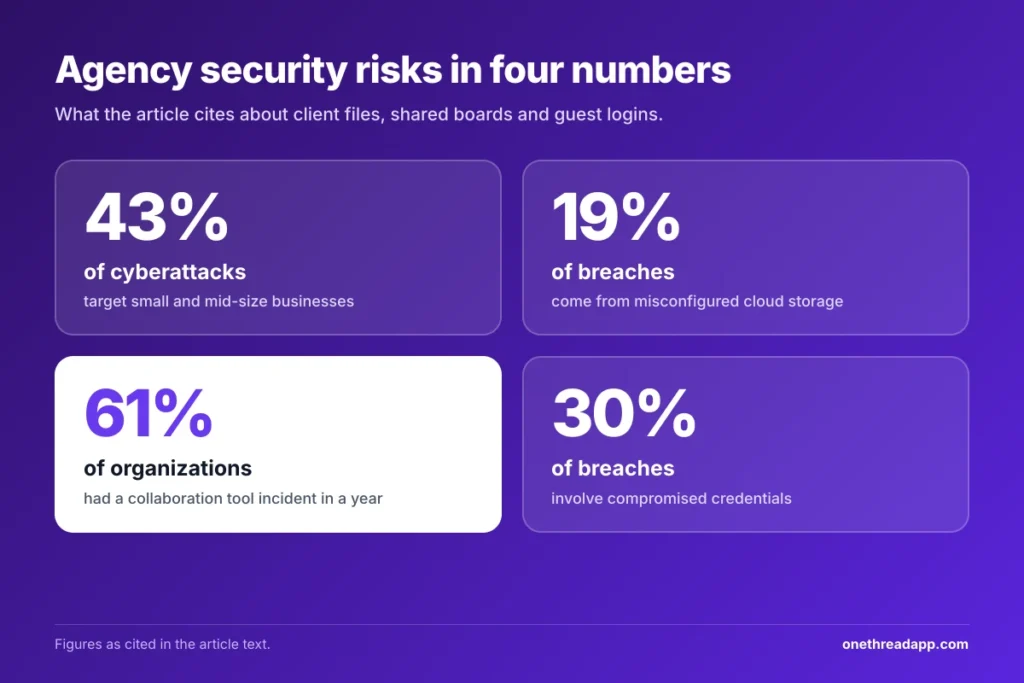
As agencies increasingly rely on digital platforms, the attack surface expands. Unauthorized access, data leaks, and compliance failures are real threats. According to a 2023 report, 43% of cyberattacks target small to medium businesses, including agencies, making them prime targets for cybercriminals.
Understanding these vulnerabilities requires a thorough examination of each component – client files, shared boards, and guest logins – and how they interact within an agency’s ecosystem. Each element plays a crucial role in daily operations but also presents unique challenges that agencies must address to maintain robust security.
For agencies looking to reinforce their security posture, consulting with technology consultants at All In IT can provide tailored strategies to protect client files while maintaining operational flexibility. Such expert guidance helps align security measures with agency workflows, ensuring protection without sacrificing productivity.
Client Files: The Heart of Agency Data Security
Client files represent the lifeblood of any agency. They often contain sensitive personal information, proprietary data, contracts, financial details, and creative assets. Securing these files is non-negotiable to maintain client trust and comply with industry regulations such as GDPR, CCPA, or HIPAA, depending on the sector.
Many agencies use cloud services or shared drives to store and share client files. While these platforms offer convenience and accessibility, they can also be misconfigured, leading to accidental exposure or unauthorized access. Studies indicate that 19% of data breaches result from misconfigured cloud storage.
Beyond misconfiguration, threats such as ransomware attacks, phishing, and insider threats can compromise client files. For example, ransomware attacks on businesses increased by 105% in 2022, highlighting the growing sophistication of cybercriminals targeting valuable data.
To mitigate these risks, agencies should enforce strict access controls and use encryption both at rest and in transit. Regular audits of file permissions are essential to ensure that only authorized personnel have access. Additionally, implementing data loss prevention (DLP) tools can help monitor and restrict sensitive information from leaving the organization.
Educating team members on secure file handling practices is equally critical. Human error remains a leading cause of data breaches, emphasizing the need for comprehensive security training programs that cover phishing awareness, password hygiene, and safe sharing protocols.
Shared Boards: Collaboration vs. Vulnerability
Shared boards, such as those found in popular project management and creative collaboration tools, enable teams and clients to work together in real time. These boards often contain project timelines, task details, confidential brainstorming notes, and sometimes even sensitive client information.
While shared boards enhance transparency and productivity, they also pose risks if access is not carefully managed. Guest users with limited permissions can inadvertently gain broader access through platform vulnerabilities or improper sharing settings. Additionally, the use of third-party integrations can introduce additional attack vectors if those services are compromised.
According to a recent survey, 61% of organizations reported at least one security incident related to collaboration tools in the past year. This statistic underscores the widespread nature of vulnerabilities within collaborative environments.
To protect shared boards, agencies should implement role-based access controls and enforce the principle of least privilege, ensuring users only have the minimum necessary access. Audit trails and monitoring can help detect suspicious activity early, such as unusual login times or access from unexpected locations.
Moreover, agencies should regularly review sharing permissions, especially after project completion, to revoke access that is no longer needed. Employing secure collaboration platforms that offer granular permission settings and robust encryption is also advisable.
In addition, adopting enkompas’s cybersecurity framework can help agencies develop a comprehensive cybersecurity framework that addresses the unique challenges posed by collaborative environments. This approach ensures that collaboration remains productive without compromising security.
Guest Logins: Convenience with Caveats
Guest logins are commonly used to provide external partners, clients, or freelancers with temporary access to an agency’s systems. While enabling seamless cooperation, guest logins can become a backdoor for cyber threats if not properly managed.
Agencies must consider how guest accounts are provisioned, monitored, and deactivated. Poorly controlled guest access increases the risk of credential theft, insider threats, and unauthorized data extraction. Guest accounts often have fewer security restrictions, which can be exploited by attackers.
Industry data reveals that 30% of data breaches involve compromised credentials, including those of guest users. This highlights the critical need to secure guest access points rigorously.
To reduce these risks, agencies should implement multi-factor authentication (MFA) for guest accounts and limit their access scope strictly to what is necessary for the specific task. Automated expiration of guest credentials and regular access reviews are also recommended best practices.
Additionally, logging and monitoring guest activity can help detect anomalies, such as attempts to access restricted areas or download excessive amounts of data. Educating external collaborators about security policies and expectations can further reduce risk.
Best Practices for Minimizing Risk
Agencies can take several proactive steps to manage the risks associated with client files, shared boards, and guest logins:
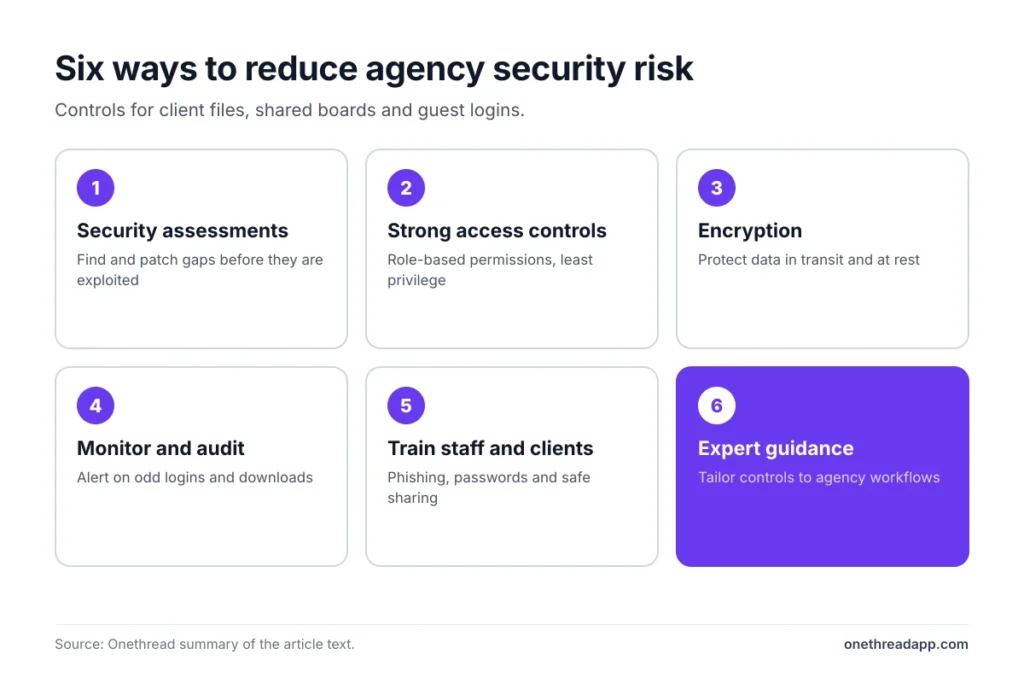
- Conduct Regular Security Assessments: Evaluate current tools and processes to identify vulnerabilities and patch gaps before they can be exploited.
- Implement Strong Access Controls: Use role-based permissions and the principle of least privilege to restrict access to sensitive information.
- Employ Encryption: Protect data both in transit and at rest to prevent interception or unauthorized access.
- Monitor and Audit Access: Use automated tools to detect anomalies and unauthorized access promptly.
- Educate Staff and Clients: Provide ongoing training on security hygiene, phishing risks, and safe collaboration practices.
- Leverage Expert Guidance: Work with specialized technology consultants to build resilient security frameworks tailored to agency needs.
Furthermore, agencies should establish clear policies on data retention and deletion, ensuring that obsolete or unnecessary information is securely removed to reduce exposure.
The Role of Technology and Expertise
Technology alone cannot solve security challenges. It requires a combination of the right tools, policies, and expert guidance. Agencies should consider partnerships with IT consultants who specialize in security and compliance to tailor solutions that fit their unique workflows.
By engaging a specialist, agencies gain access to expertise that balances security with usability, ensuring client files remain protected without hindering productivity. Such partnerships can also assist in navigating complex regulatory requirements, reducing the risk of costly penalties.
Similarly, adopting a recognized framework enables agencies to implement a robust cybersecurity framework designed to safeguard collaborative tools and guest access points. This comprehensive approach integrates technology, process improvements, and user education to create a resilient security posture.
Investing in cybersecurity is not just about risk avoidance; it is a strategic enabler that builds client confidence and supports sustainable growth in an increasingly digital marketplace.
Conclusion
The convenience of client files, shared boards, and guest logins comes with inherent risks that agencies cannot afford to ignore. As cyber threats evolve, so must the strategies to protect sensitive data and maintain client trust.
By understanding the vulnerabilities in these common agency tools and implementing best practices alongside expert guidance, agencies can create a secure and efficient work environment. The goal is not only to prevent breaches but also to build resilience that supports growth and innovation in a competitive marketplace.
Taking a proactive, informed approach to risk management is essential for any agency that values its reputation and the security of its clients’ information. With the right combination of technology, policies, and partnerships, agencies can confidently navigate the complex landscape of modern digital collaboration.