Introduction to Supplier Scorecards in Technology Contracts
In today’s fast-paced technology landscape, businesses rely heavily on third-party suppliers to provide critical IT services and infrastructure. Managing these relationships effectively is essential to ensure that service levels meet expectations, contracts are renewed on time, and responsibilities are clearly defined. Supplier scorecards have emerged as a valuable tool to monitor and evaluate the performance of technology vendors, enabling organizations to maintain transparency and drive continuous improvement.
Supplier scorecards typically assess various metrics such as Service Level Agreements (SLAs), adherence to renewal dates, and clarity regarding ownership of the supplier relationship. These scorecards provide a structured framework to help procurement teams, IT managers, and executives make informed decisions about vendor management. This article explores the key components of supplier scorecards for technology contracts and offers insights on how to optimize these tools for better vendor collaboration and contract outcomes.
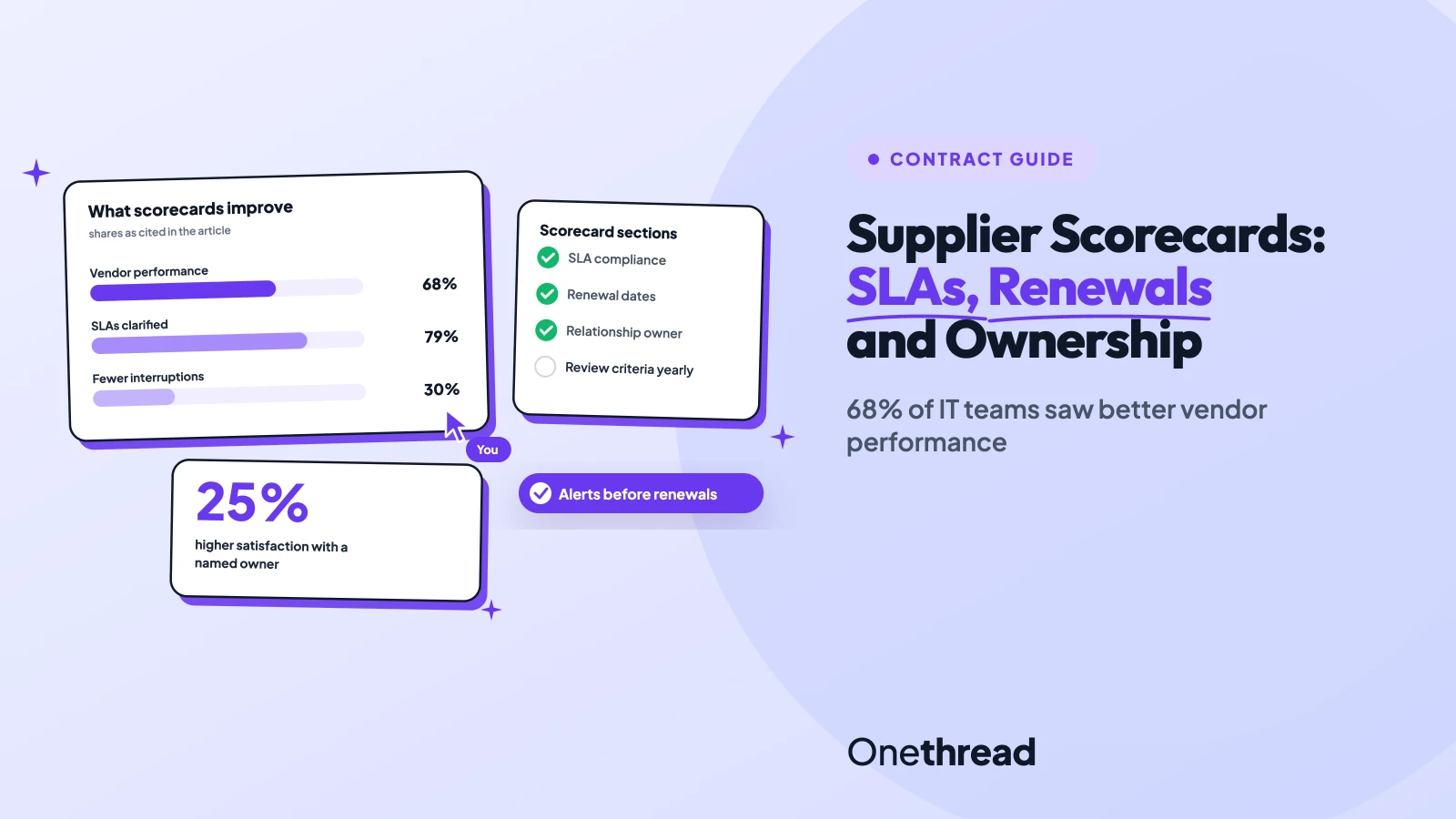
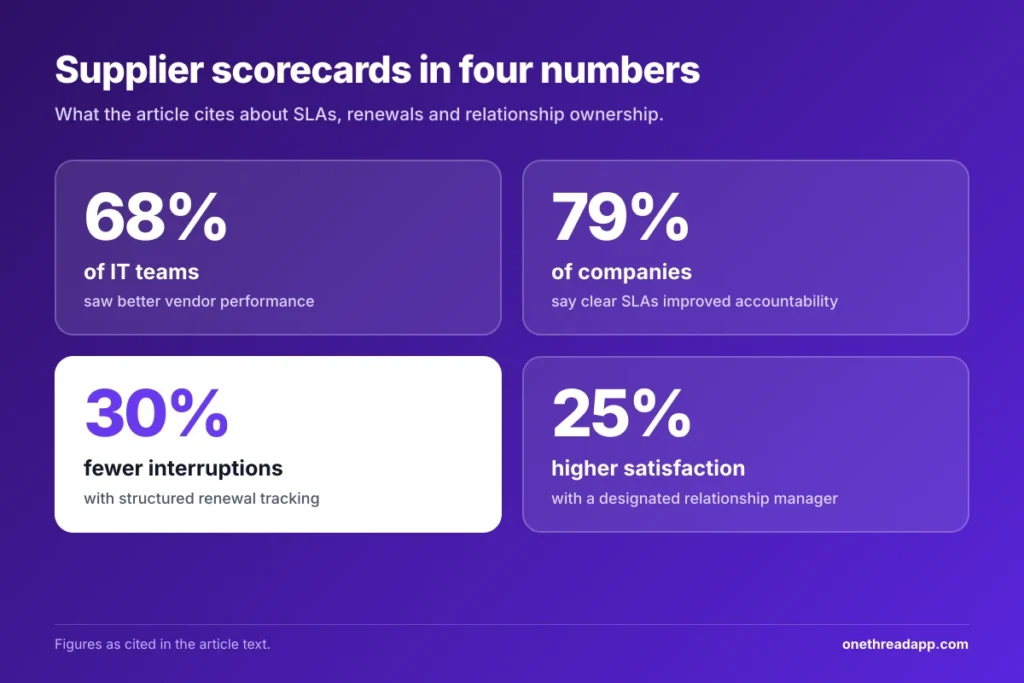
In fact, a study found that 68% of IT organizations that implemented supplier scorecards reported improved vendor performance and stronger alignment with business goals.
The Importance of Service Level Agreements (SLAs)
One of the core elements of any technology contract is the SLA. SLAs define the expected levels of service delivery, including performance benchmarks, response times, system uptime, and issue resolution protocols. A well-crafted SLA clarifies what the supplier is accountable for and sets measurable standards to evaluate their performance.
In supplier scorecards, SLA compliance is a critical metric. Regularly tracking SLA adherence allows organizations to identify areas where the supplier excels or falls short, facilitating proactive problem resolution. For example, if a cloud service provider consistently misses guaranteed uptime targets, this can trigger discussions about improving infrastructure or renegotiating contract terms.
When managing SLAs, collaboration with experienced providers is essential. Organizations looking to enhance their SLA management can discuss with NetWize to gain insights into best practices and tailored service solutions that align with business needs.
According to a recent survey, 79% of companies reported that clearly defined SLAs significantly improved supplier performance and accountability.
Tracking Renewal Dates to Avoid Contract Lapses
Another vital aspect of supplier scorecards is monitoring contract renewal dates. Technology contracts often have fixed terms with automatic renewal clauses or require active renegotiation before expiry. Missing these renewal deadlines can lead to service disruptions, unfavorable auto-renewal terms, or loss of negotiation leverage.
Supplier scorecards should include a dedicated section that tracks upcoming renewal dates, alerting contract managers well in advance. This proactive approach ensures sufficient time for evaluating supplier performance, assessing market alternatives, and negotiating improved terms.
Incorporating automated reminders and centralized contract repositories can streamline renewal management, reducing administrative overhead and risk. Companies that implement structured renewal tracking report a 30% decrease in service interruptions related to contract lapses.
Defining Ownership: Who Manages the Supplier Relationship?
A frequently overlooked but crucial component of supplier management is clarifying who owns the relationship internally. Without clear ownership, communication gaps can arise, leading to unresolved issues, duplicated efforts, or missed opportunities for improvement.
Supplier scorecards can include a section that designates a relationship owner or manager responsible for day-to-day interactions, escalations, and contract compliance monitoring. This role is often filled by a procurement specialist, vendor manager, or IT leader, depending on organizational structure.
Having a single point of contact fosters accountability and ensures consistent tracking of supplier performance against agreed-upon metrics. It also facilitates better alignment between business objectives and supplier capabilities.
Industry data shows that organizations with designated supplier relationship managers achieve 25% higher satisfaction rates in vendor communication and issue resolution.
For organizations that require comprehensive support in managing technology contracts and renewals, exploring managed services via Nuvodia offers access to specialists who simplify contract oversight and vendor coordination.
Best Practices for Creating Effective Supplier Scorecards
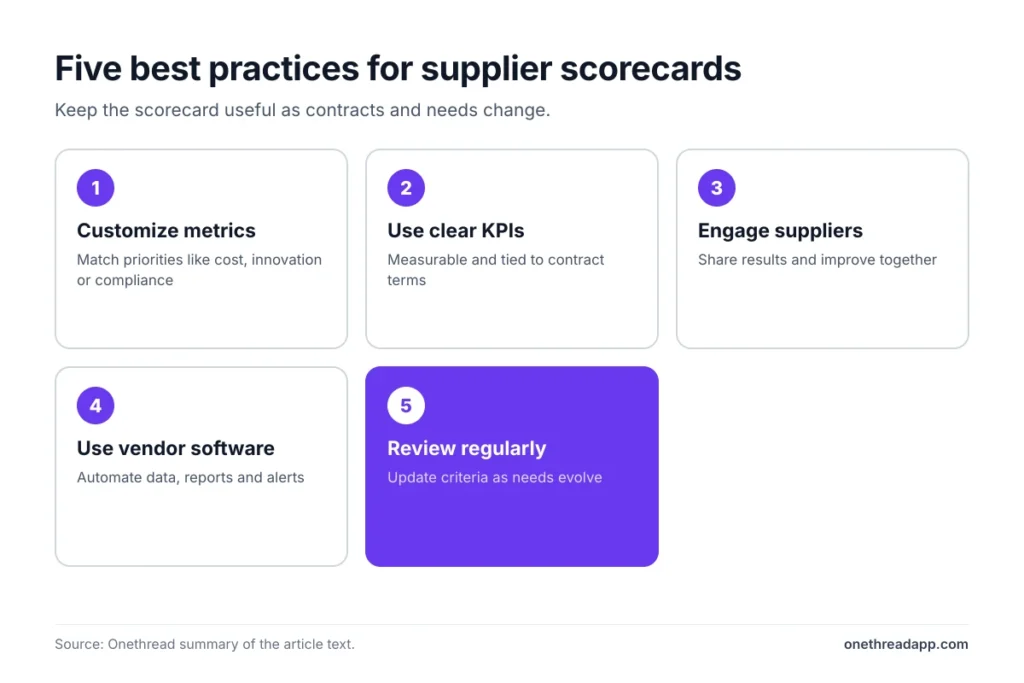
To maximize the benefits of supplier scorecards, businesses should adhere to several best practices:
- Customize Metrics to Business Needs: While common metrics include SLA adherence and renewal dates, tailor the scorecard to reflect specific priorities such as innovation, cost control, or compliance.
- Use Clear and Quantifiable KPIs: Define key performance indicators that are measurable, objective, and aligned with contractual obligations.
- Engage Suppliers in the Process: Share scorecard results regularly with suppliers to foster transparency and collaborative improvement.
- Leverage Technology Tools: Utilize vendor management software to automate data collection, reporting, and alerts related to scorecard metrics.
- Review and Update Regularly: Periodically reassess scorecard criteria to ensure they remain relevant as business needs and supplier capabilities evolve.
Additionally, integrating scorecards with real-time analytics platforms can provide dynamic insights into supplier performance, enabling quicker adjustments and more informed decision-making.
The Role of Technology in Enhancing Supplier Scorecards
Modern vendor management solutions have transformed how organizations track and analyze supplier performance. These platforms offer dashboards that consolidate SLA metrics, renewal dates, and relationship ownership details into a single interface, simplifying oversight.
Automated alerts can notify stakeholders about upcoming renewals or SLA breaches, allowing preemptive action. Moreover, data visualization tools help identify trends and patterns, making it easier to spot systemic issues or opportunities for improvement.
A market research report indicates that companies using advanced supplier management software experience a 40% increase in operational efficiency related to vendor oversight.
By integrating these technologies, organizations can elevate their supplier scorecards from static reports to dynamic management tools that actively drive better contract outcomes.
Conclusion
Supplier scorecards are indispensable tools for managing technology contracts effectively. By focusing on critical components such as SLAs, renewal dates, and relationship ownership, organizations can drive improved supplier performance, mitigate risks, and optimize contract outcomes. Incorporating best practices and leveraging expert managed services can further enhance the value derived from supplier scorecards, ensuring that technology partnerships contribute positively to business success.
Adopting a disciplined approach to supplier scorecards will empower businesses to maintain strong vendor partnerships in an increasingly complex technology ecosystem. By committing to continuous evaluation and open communication, companies can transform supplier scorecards from mere compliance tools into strategic assets that foster innovation, cost savings, and long-term collaboration.